Send this to the colleague whose calendar has no gaps.
You know who this is for.
In short
When meetings run straight into each other, there is no room left in your head, and you start solving instead of listening. A small gap between meetings, even ten minutes with a window, water and nothing else, helps you arrive in the next conversation and really hear the person.
Back-to-back calls cost listening.
Not because people matter less.
When there's no room left, you're already in the next meeting. Try this: notice when you stop listening.
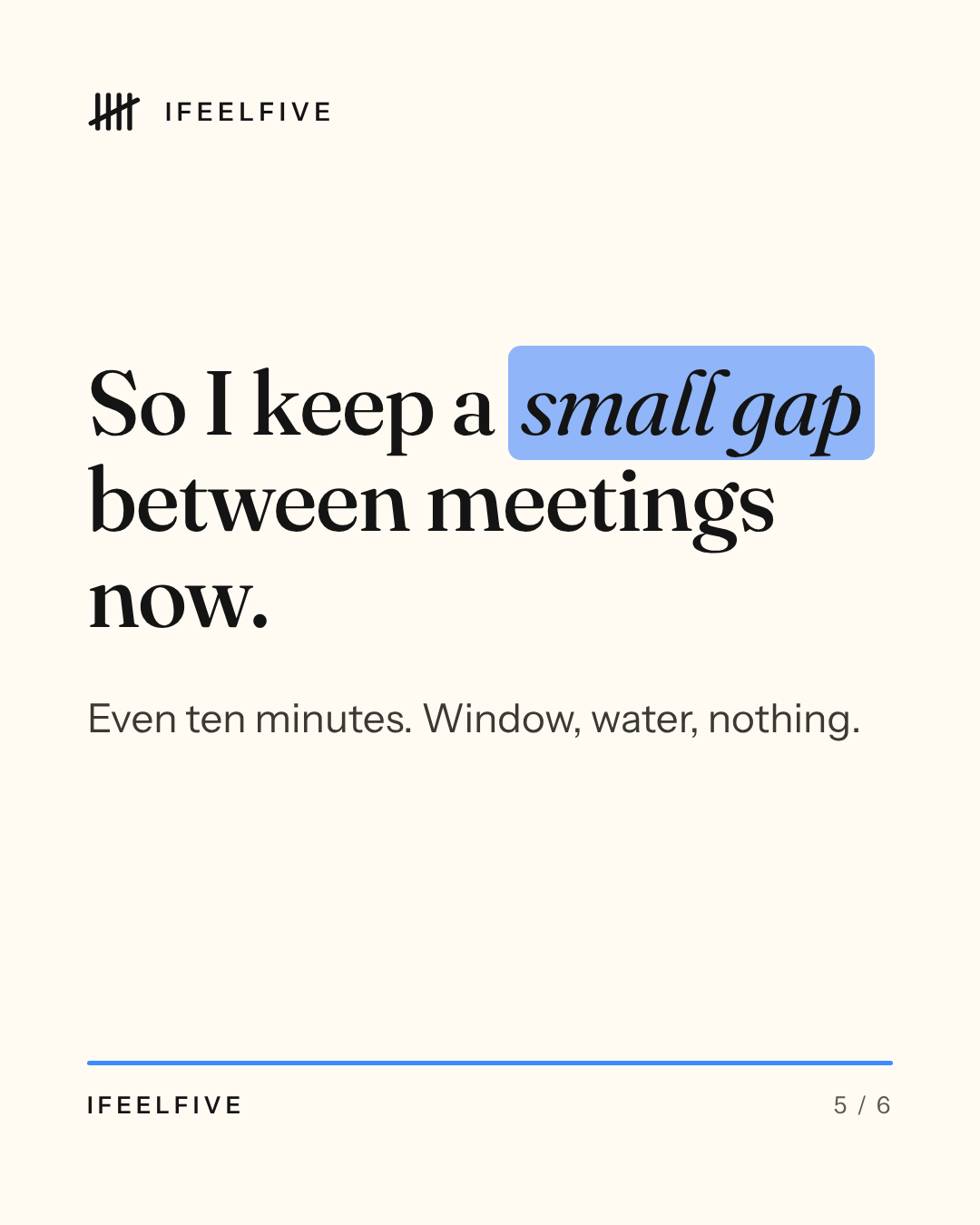
Keep a small gap.
Even ten minutes.
Window, water, nothing. Try this: block one gap in tomorrow's calendar.
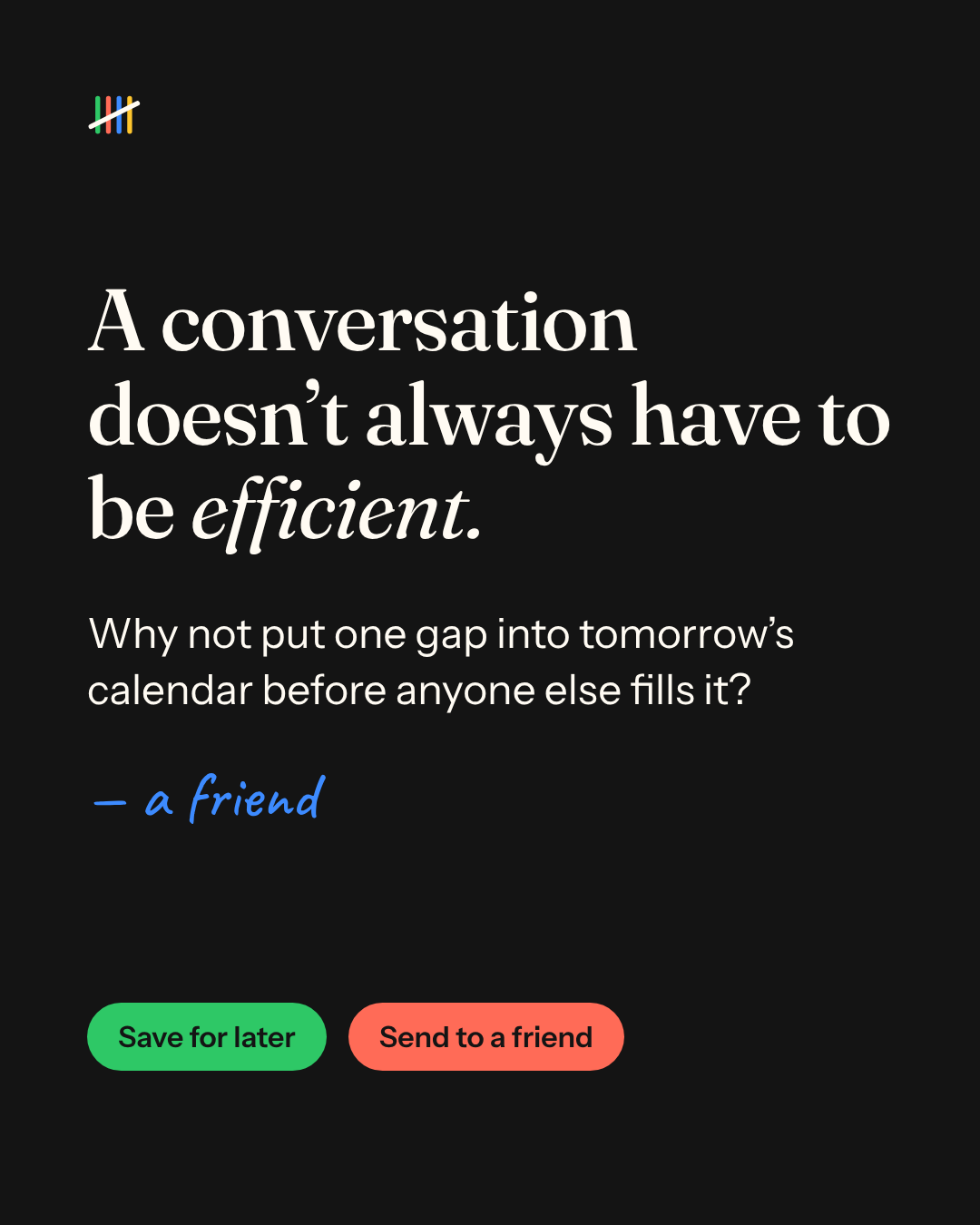
Not every conversation has to be efficient.
Some talks need room more than speed. Try this: let one call run without watching the clock.
Why not put one gap into tomorrow's calendar before anyone else fills it?
Want to keep it? Recalling beats rereading.
Eyes closed. Say three things you want to keep, out loud if you can. 30
25 minutes on one thing, then breathe: the focus timer →
Watch on InstagramWatch on Facebook
Save the cards
Tap a card to see it bigger. Free to share: every card you download carries ifeelfive.com as the source, and I ask you to keep it there. Image use
Thank you.
Anonymous. No login, no cookies. How it works
Questions people ask
Why are back-to-back meetings so tiring?
Without a gap your mind is still in the last meeting or already in the next, so you listen less and tire faster.
How long should a break between meetings be?
Even ten minutes helps: look out of a window, drink water, do nothing.
How do I get breaks between meetings?
End meetings five or ten minutes early by default, or block short gaps in your calendar before someone else fills them.