When someone tells you something big
Three more questions: stay a little longer.
Someone tells you they are overwhelmed. Or that they got the job. Most of us answer with one sentence, “thanks for sharing” or “congrats!”, and the moment is over. What makes people feel heard is simpler: stay three questions longer, before you say anything about yourself. Not from a list: listen, get curious, and let each question grow out of what they just said.
When it's heavy
sad, overwhelmed, worried, hurt
- UnderstandWhat happened?
- What happened, from the start?
- What was the hardest moment?
- When did it start to feel like too much?
- Who else knows?
- FeelHow does it feel right now?
- How does it feel right now, as you tell me?
- Is it more sad, or more tired?
- What's sitting heaviest on you today?
- Why do you think it hit you so hard?
- NeedWhat would help most?
- What would help most right now: me listening, or ideas?
- Is there one small thing I can do?
- What do you need tonight?
- Do you want me to check in tomorrow?
When it's happy
excited, proud, in love, relieved
- UnderstandHow did it happen?
- Tell me everything, how did it happen?
- When did you find out?
- Who did you tell first?
- What did you learn that you didn't know before?
- FeelWhat was the best moment?
- What was the moment it sank in?
- How does it feel now, saying it out loud?
- What part makes you proudest?
- Why does this mean so much to you?
- CelebrateHow do you want to celebrate?
- How do you want to celebrate?
- What are you most looking forward to?
- What does this make possible?
- Can I celebrate with you?
The ladders are a starting point, not a script. If something they say makes you curious, follow that instead. The order matters less than the feeling on the other side: you really want to know. Coaches have a rule of thumb for this: talk about ten percent of the time, and ask “why” often. A curious “why does this mean so much to you?” opens the feeling level. Only the “why did you do that?” kind, which sounds like blame, closes it.
What it sounds like
Lea: I got the job. I still can’t believe it.
Ben: Tell me everything, how did it happen?
Lea: They called while I was in the supermarket …
Ben: What was the moment it sank in?
Lea: Honestly, telling my mum.
Ben: How do you want to celebrate?
Instead of …
Thanks for sharing.What was the hardest moment?Cool, congrats!Tell me everything, how did it happen?I know exactly how you feel.How does it feel right now?At least …What's sitting heaviest on you today?You should …What would help most: me listening, or ideas?That happened to me too …What was the moment it sank in?
Why it works
One follow-up shows you heard the words. Three show you care about the person. Each question gives them room to go one step deeper, and keeps you from steering the talk back to yourself. It is the last move of the listening compass, “stay one more question”, for the moments when feelings run big. And it works the same way for joy: sharing good news and being met with real interest makes the good feeling grow.
Practise it
Happy and slightly heavy stories to practise with, two or more players. Anyone can pass.
Who is playing?
Which round?
Nothing is stored or sent. The game runs on this phone only.
A friend, not a therapist
These questions are what a good friend does. If someone carries something heavy for a long time, or talks about hurting themselves, help them reach someone trained: find a free helpline near you.
Keep the questions
Save the card to your phone, for the next time someone tells you something big.
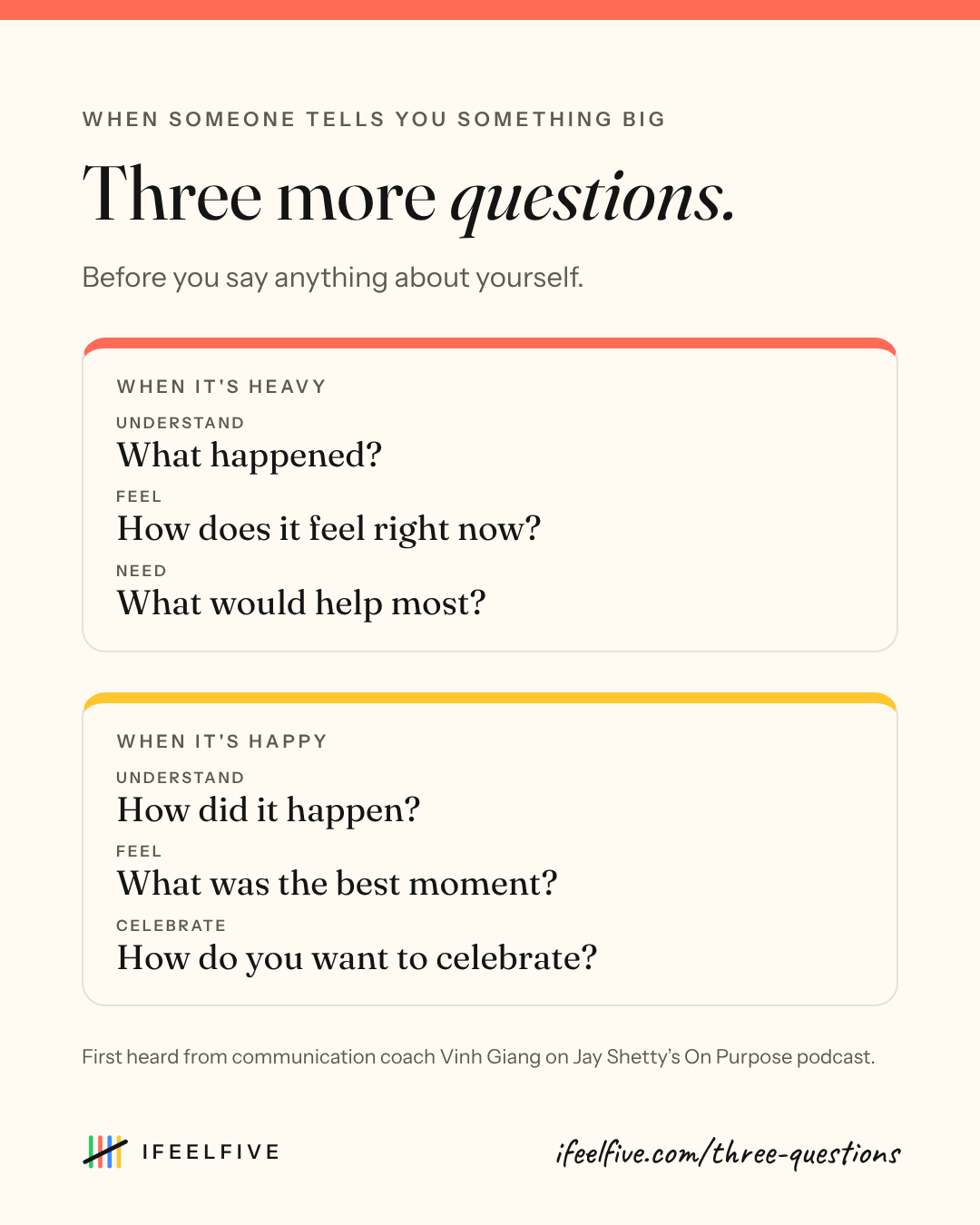
I first heard this idea from communication coach Vinh Giang on Jay Shetty’s podcast On Purpose. The ladders and examples here are mine.
More on listening: Feelings wheel · Let’s play IFEELFIVE · Social notes
Questions people ask
What should I say when someone opens up to me?
Less than you think. Instead of closing with 'thanks for sharing' or jumping to advice, ask three follow-up questions before you say anything about yourself: one to understand what happened, one about how it feels right now, and one about what would help. People feel heard when you stay with their story.
Does it work for good news too?
Yes. When someone shares something exciting, 'congrats!' ends the moment. Ask how it happened, what the best moment was, and how they want to celebrate. How we react to good news matters to a relationship as much as how we react to bad news.
Where does the idea come from?
I first heard it from communication coach Vinh Giang on Jay Shetty's On Purpose podcast. The ladders, examples and practice round on this page are mine.
Should I ask why?
Yes, when it comes from curiosity. 'Why does this mean so much to you?' or 'Why do you think it hit you so hard?' open the feeling level. A 'why did you do that?' that sounds like blame closes it. Coaches often say: talk about ten percent of the time, and ask why often.
Do I have to ask exactly these questions?
No. They are a starting point for when your mind goes blank. The real skill is listening and getting curious: let the next question come from what the other person just said. If they light up at one detail, ask about that.
What if I ask the wrong question?
Then they will tell you, and that is fine. A question that shows you were listening is never really wrong. Guessing the feeling ('sounds more tired than sad?') also helps, the feelings wheel has words for it.
Is this therapy?
No. It is what a good friend does. If someone carries something heavy for a long time, or talks about hurting themselves, help them reach someone trained: findahelpline.com lists free helplines worldwide.
Can we practise it?
Yes. The round 'Three more questions' below and in Let's play IFEELFIVE gives you happy and slightly heavy stories to practise with, alone with one person or as a family.
A new question every Friday?
One question for the weekend, to ask the people you love, plus the Sunday note. Free, unsubscribe with one click.
Prefer WhatsApp? Follow the channel and get every new post on your phone.