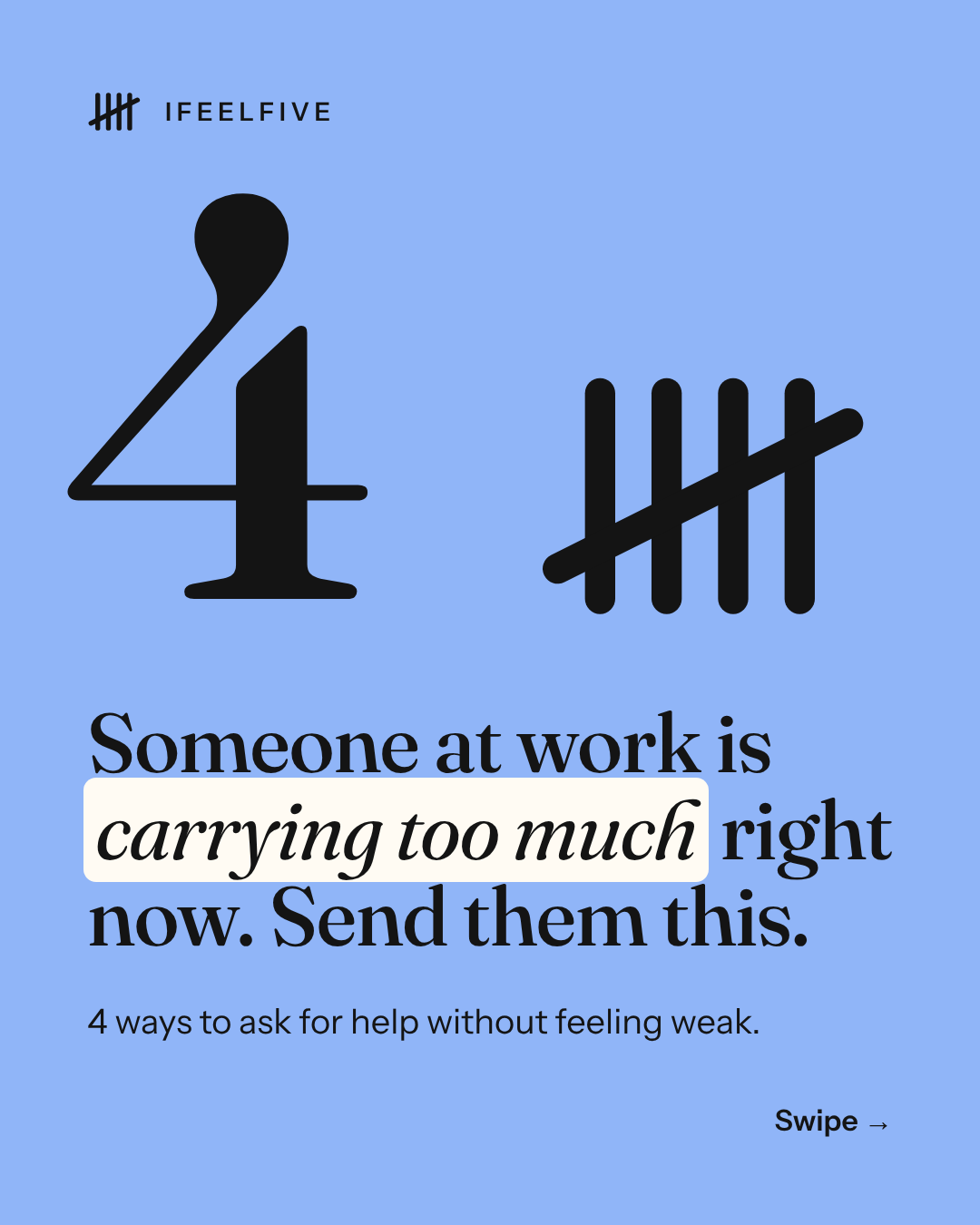
Someone at work is carrying too much right now. Send them this.
You know who this is for.
In short
Asking for help at work often feels like admitting you can't do it, but most colleagues see it as trust. It helps to ask early while the problem is still small, to be specific about what you need and by when, and to offer something back.
Asking for help feels like admitting you can't do it.
Most people see it the other way: you trust them.
Being asked usually feels good. Try this: remember the last time someone asked you.
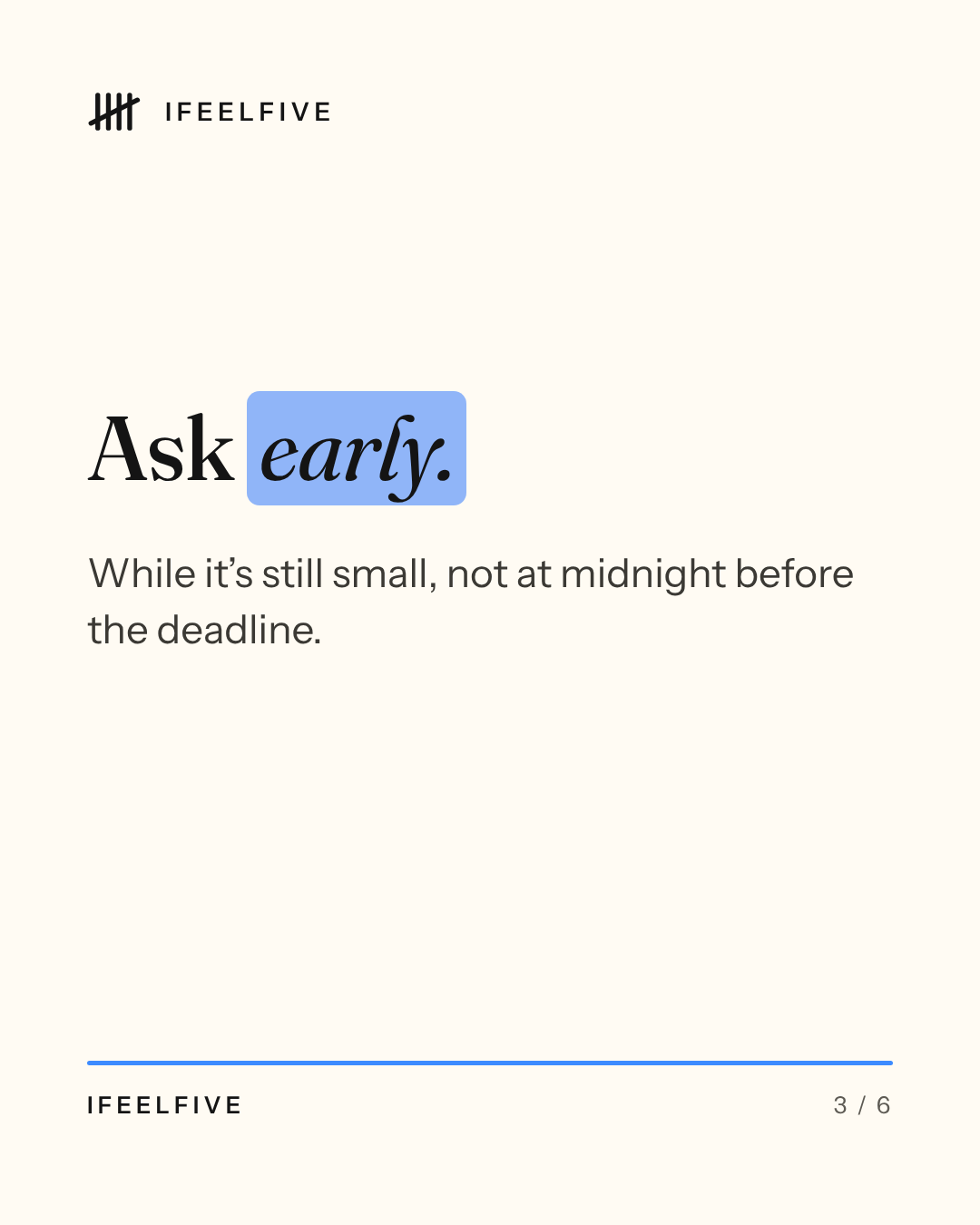
Ask early.
While it's still small, not at midnight before the deadline.
Early asks are easy to say yes to. Try this: ask before you feel stuck.
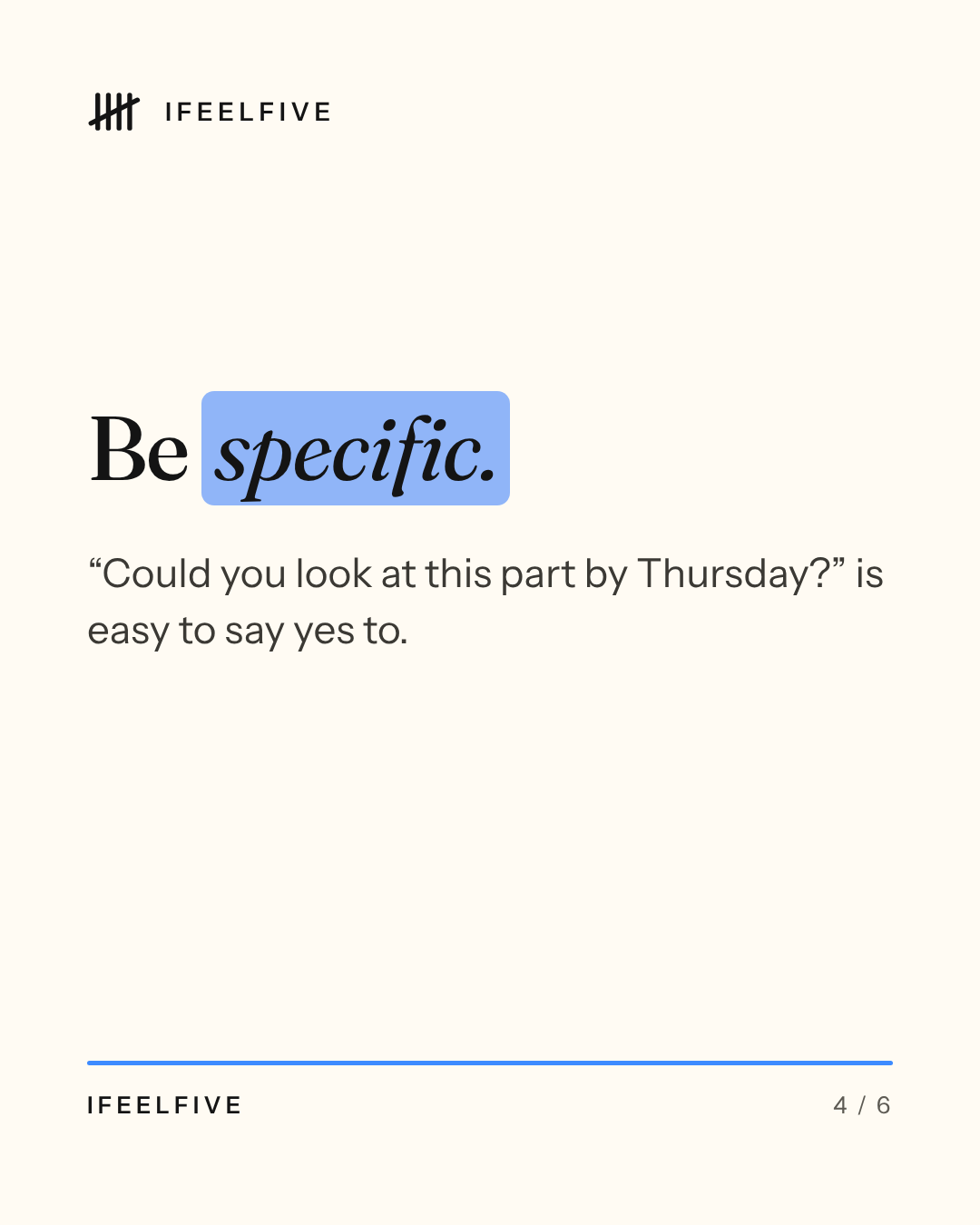
Be specific.
“Could you look at this part by Thursday?”
Clear asks get clear answers. Try this: name the part and the day.
Offer something back.
Now or later.
Help flows both ways in good teams. Try this: ask what you can take off their plate.
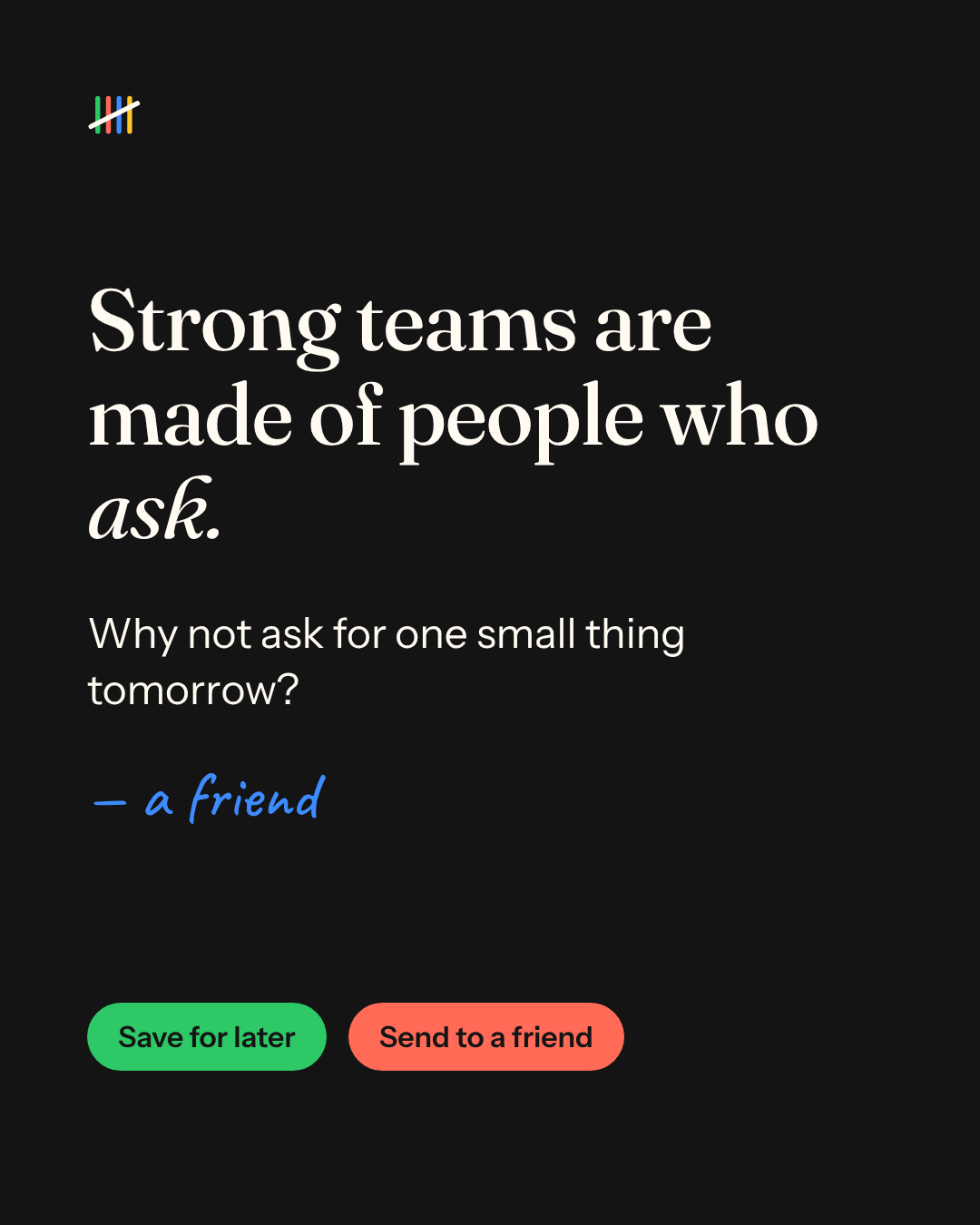
Strong teams are made of people who ask. Why not ask for one small thing tomorrow?
Want to keep it? Recalling beats rereading.
Eyes closed. Say three things you want to keep, out loud if you can. 30
25 minutes on one thing, then breathe: the focus timer →
Watch on InstagramWatch on FacebookWatch on LinkedIn
Save the cards
Tap a card to see it bigger. Free to share: every card you download carries ifeelfive.com as the source, and I ask you to keep it there. Image use


Thank you.
Anonymous. No login, no cookies. How it works
Questions people ask
Is asking for help at work a sign of weakness?
No. Most colleagues see it as trust, and strong teams are built by people who ask early and clearly.
How do I ask a colleague for help?
Ask early, be specific about what and by when, and offer something back.
What do I say when I need help at work?
Be specific: name the task, what you have already tried and what would help. Specific requests are easier to say yes to.