If I don't ask, the answer is always no.
Didn't ask for it, because you already knew the answer? I did that for years.
In short
Many of us say no for other people before they get the chance. But if you don't ask, the answer is always no; if you ask, it's at least a maybe. Studies suggest people say yes to small requests far more often than we expect (Flynn & Lake, 2008). And a no only answers one question, not who you are.
I used to say no for other people.
Before they even had the chance.
I decided their answer in my head and never asked. Try this: notice one ask you've already answered for someone else.
People say yes more often than we expect.
If I ask, it's at least a maybe.
In studies, people asking for small favours guessed way too low (Flynn & Lake, 2008). Try this: ask for one small thing this week.
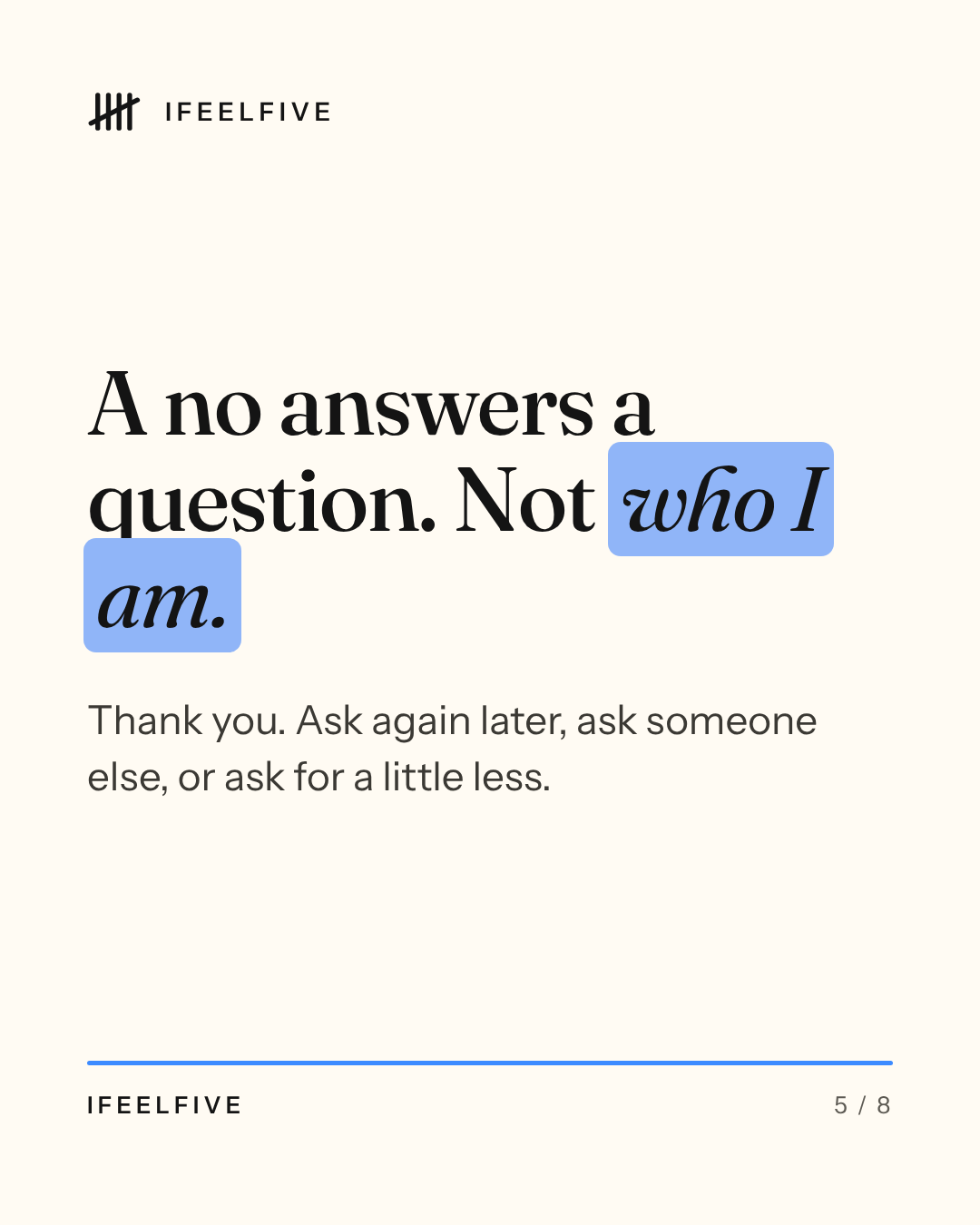
A no answers a question. Not who I am.
Thank you. Ask again later, ask someone else, or ask for a little less.
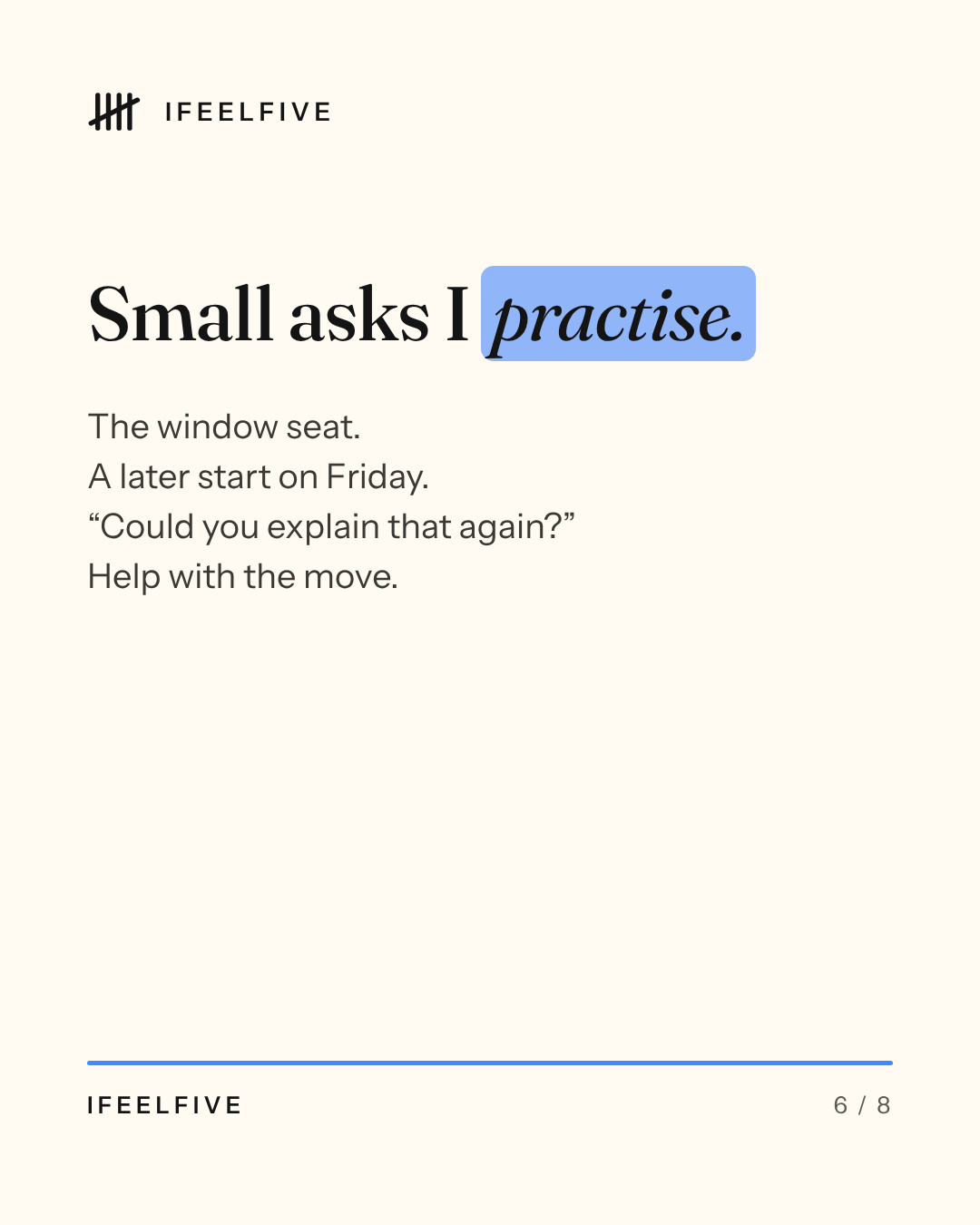
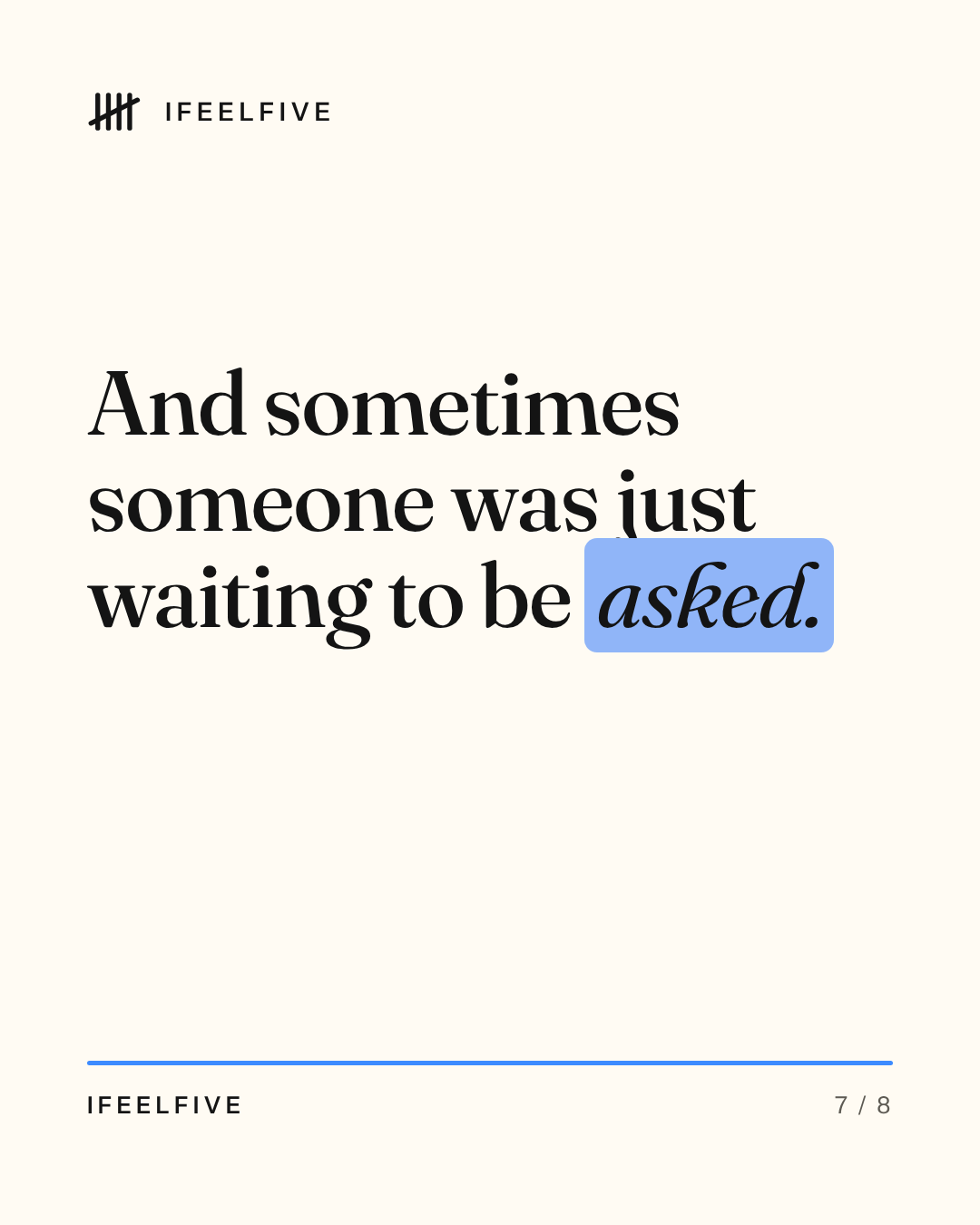
Small asks I practise: the window seat, a later start on Friday, “Could you explain that again?”, help with the move. And sometimes someone was just waiting to be asked.
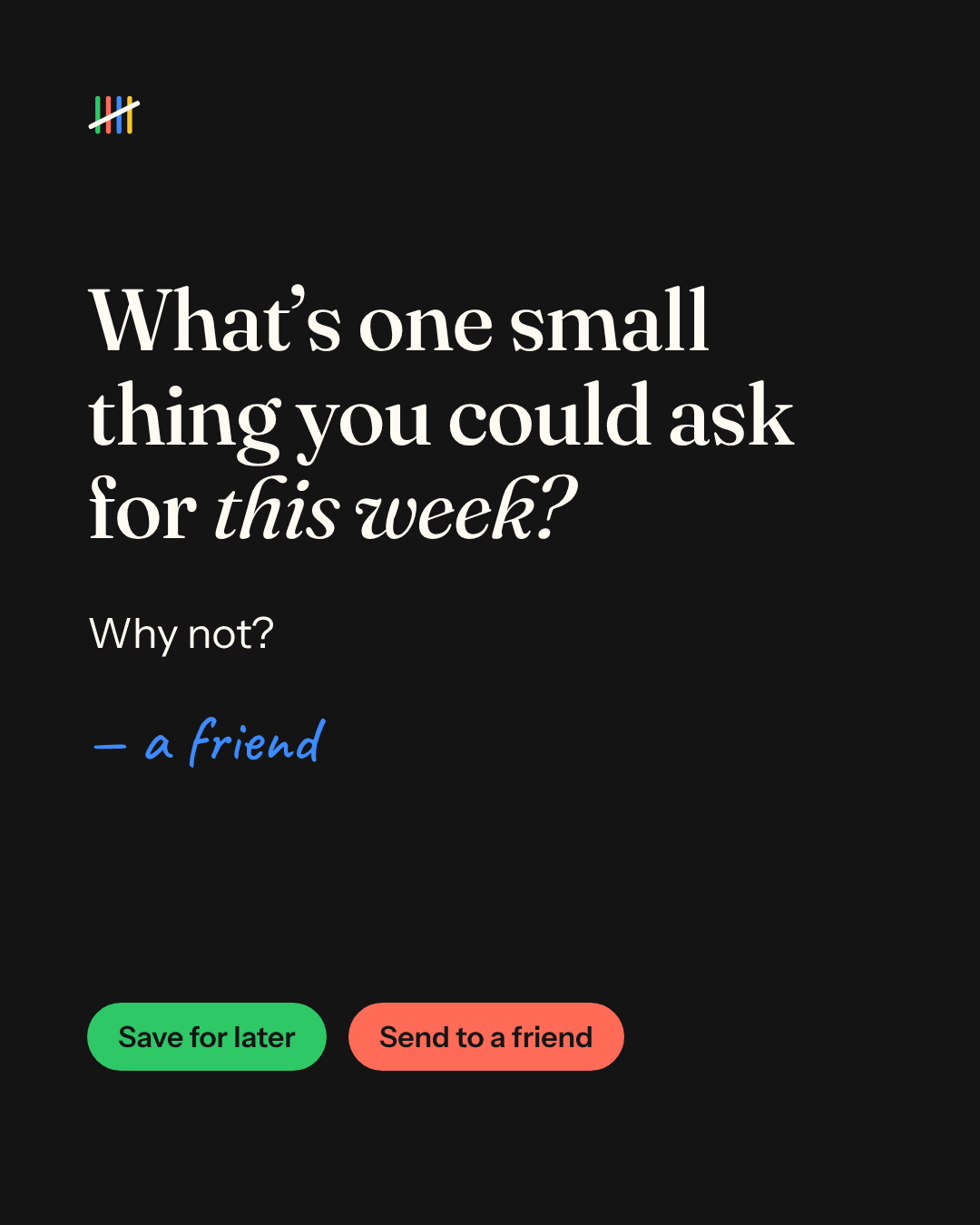
What's one small thing you could ask for this week? Why not?
Want to keep it? Recalling beats rereading.
Eyes closed. Say three things you want to keep, out loud if you can. 30
25 minutes on one thing, then breathe: the focus timer →The three lines I use to ask kindly, free →
Watch on InstagramWatch on Facebook
Save the cards
Tap a card to see it bigger. Free to share: every card you download carries ifeelfive.com as the source, and I ask you to keep it there. Image use
Thank you.
Anonymous. No login, no cookies. How it works
Questions people ask
Why is asking for things so hard?
Often we predict a no and protect ourselves from it. But we tend to underestimate how often people say yes to small requests.
Do people really say yes more than we think?
Research by Flynn and Lake (2008) found people asking for small favours guessed far too low how many others would agree.
What if the answer is no?
A no answers one question, not who you are. Say thank you, ask again later, ask someone else, or ask for a little less.