Already know the answer five minutes into the meeting? Try speaking last.
Fast answers feel helpful. Sometimes they skip the person.
In short
If you often know the answer early in a meeting, try speaking last. When you stop hunting for a solution, you hear what you'd otherwise miss: how much something matters to the other person, their worries and what's urgent for them. Asking “why?” until you really understand makes meetings better for everyone.
I'm a fast solver.
Listening is something I have to remind myself of.
Quick answers can feel like help. Try this: notice the moment you want to jump in.
Stay quiet and just listen.
Even in a call you think isn't needed.
Some calls are about the person, not the problem. Try this: let them finish before you think about the answer.
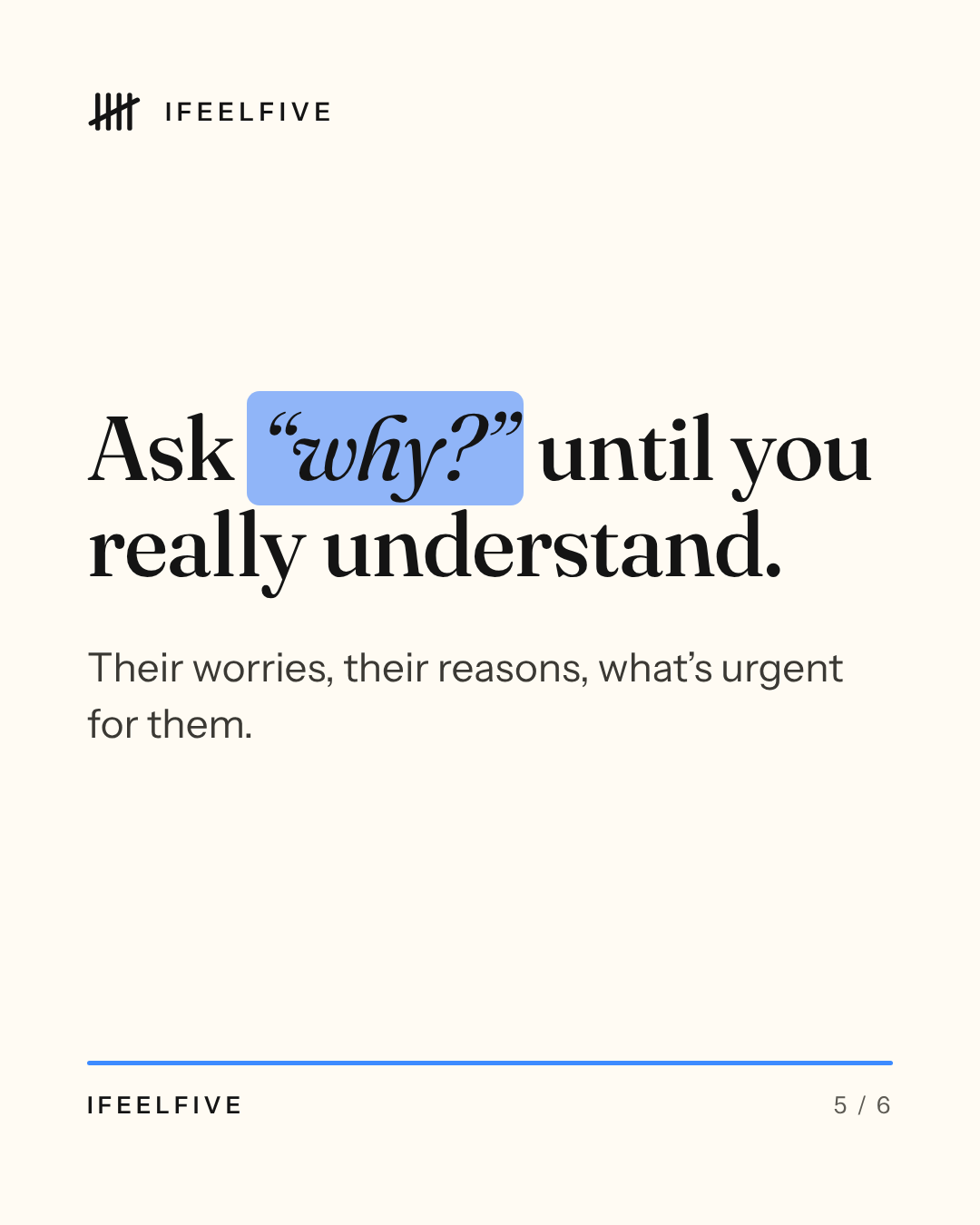
Ask “why?” until you really understand.
Their worries, their reasons, what's urgent for them.
Understanding comes before solving. Try this: ask one more why than feels natural.
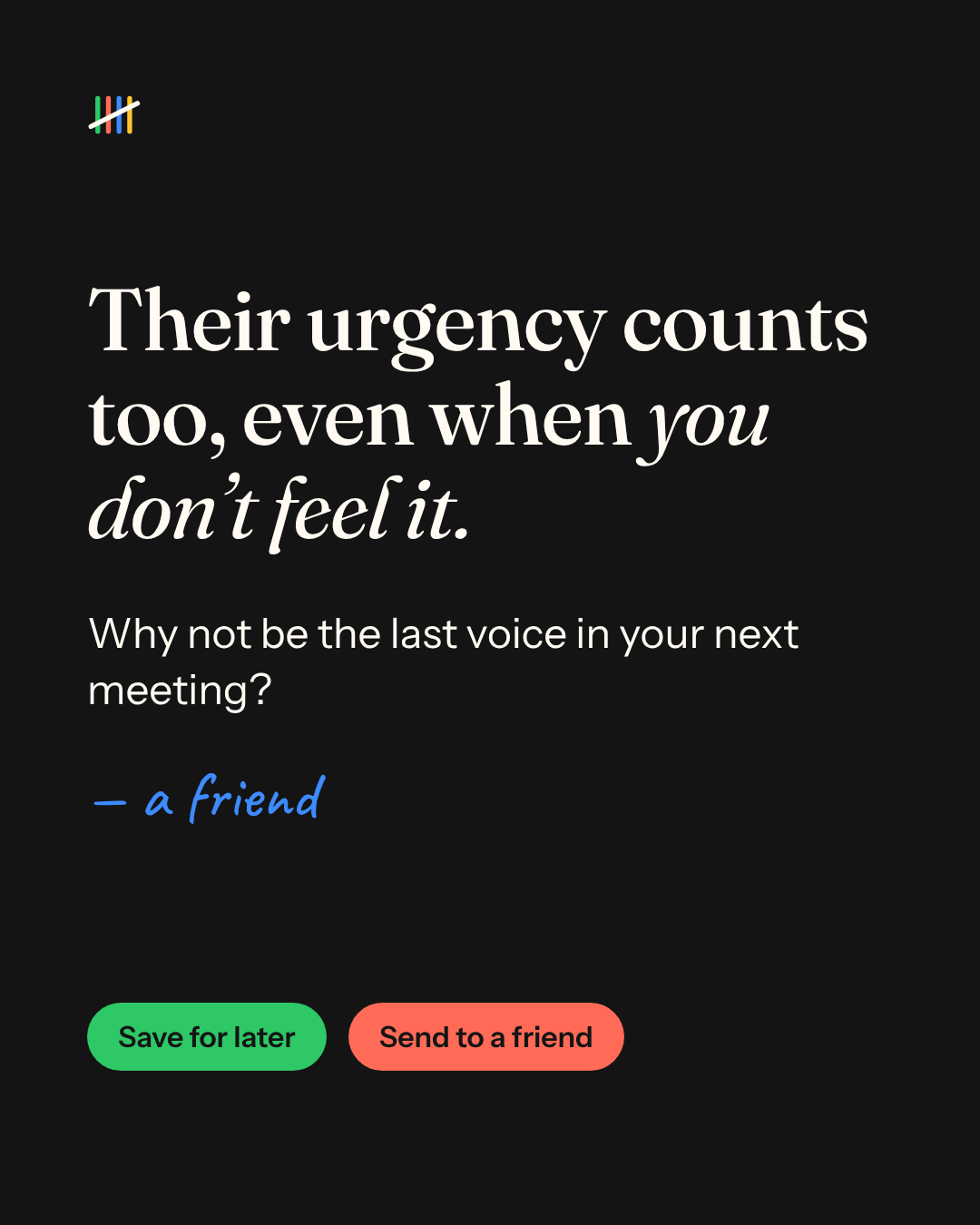
Their urgency counts too.
Even when you don't feel it.
What matters to them is real for them. Try this: repeat back what you heard before you answer.
Their urgency counts too, even when you don't feel it. Why not be the last voice in your next meeting?
Want to keep it? Recalling beats rereading.
Eyes closed. Say three things you want to keep, out loud if you can. 30
25 minutes on one thing, then breathe: the focus timer →
Watch on InstagramWatch on FacebookWatch on LinkedIn
Save the cards
Tap a card to see it bigger. Free to share: every card you download carries ifeelfive.com as the source, and I ask you to keep it there. Image use
Thank you.
Anonymous. No login, no cookies. How it works
Questions people ask
Why should a leader speak last in meetings?
Speaking last gives others room to share their view and helps you hear what matters to them before you decide.
How do I listen better at work?
Stop hunting for the solution while others speak, ask “why?” until you understand, and take their urgency seriously.
What if I already know the answer?
Ask one more question first. You might learn why someone sees it differently, and they feel heard either way.