Snapped at someone and didn't recognise yourself? Maybe that wasn't all of you.
Maybe that wasn't all of you.
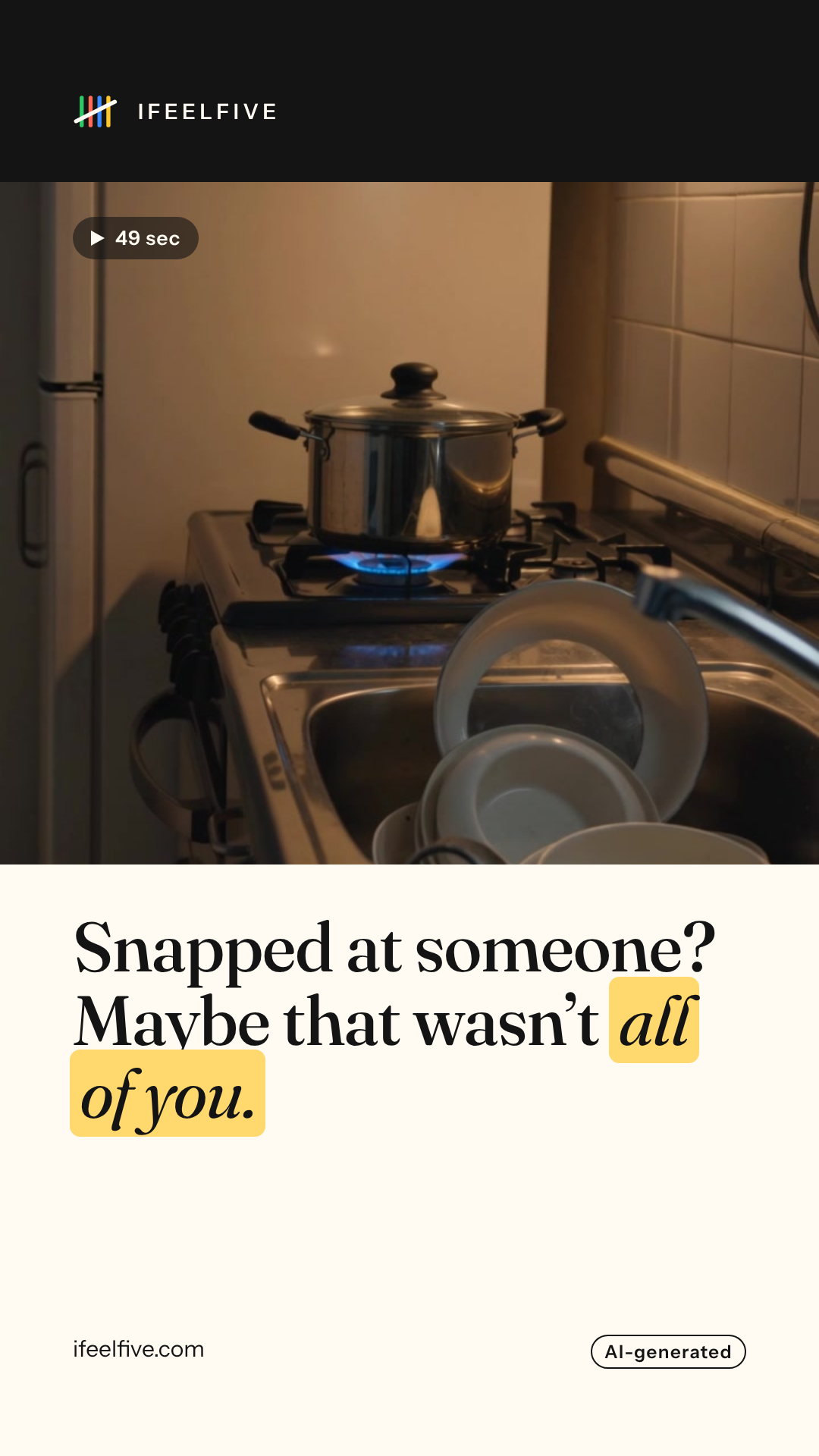 Play video · 50 sec
In short
When you snap at someone, it may not be all of you. The idea behind Internal Family Systems, described in No Bad Parts by Richard Schwartz, is that we all have inner parts that learned to protect us, often long ago. They're not the enemy; they just haven't noticed we've grown up. You can thank them, give them a new job, and ask what they're trying to protect. This is a friend's thought, not therapy.
We all have inner parts that learned to protect us.
Often a long time ago.
A sharp reaction can be an old protector at work. Try this: notice which situation sets it off.
They're not the enemy.
They just haven't noticed we've grown up.
Fighting a part rarely helps. Try this: be curious about it instead.
You can thank them, and give them a new job.
Gratitude calms what fear started. Try this: tell the part what you can handle now.
The person who overreacts?
Maybe it's a part of them too, not the whole person.
Seeing parts in others makes room for patience. Try this: ask what they might be protecting.
Next time a part of you takes over, why not ask it what it's trying to protect?
Want to keep it? Recalling beats rereading.
Eyes closed. Say three things you want to keep, out loud if you can. 30
Two minutes for yourself: breathe with me →
Watch on InstagramWatch on FacebookWatch on YouTubeWatch on TikTok
Transcript
AI-generated video: the voice and the images were created with AI. How I use AI
Snapped at someone and didn't recognise yourself? Maybe that wasn't all of you. Some of my reactions I never liked. Then I came across an idea that changed how I see them. We all have inner parts that learned to protect us, often a long time ago. They're not the enemy. They just haven't noticed we've grown up. You can thank them, and give them a new job. And the person you love who overreacts? Maybe it's a part of them too, not the whole person. Next time a part of you takes over, why not ask it what it's trying to protect? This space is free, and it stays free. The one thing that helps it grow is a follow. If it was a pause for you, why not? I feel five. Everything else is noise.
Questions people ask
Why did I snap at someone I love?
Often a protective part of you took over, one that learned long ago to react fast. It's not the whole of you.
What is No Bad Parts about?
Richard Schwartz describes Internal Family Systems: the idea that we have many inner parts, and that even difficult ones are trying to protect us. It's a book, not a substitute for therapy.
What can I do after I snapped at someone?
Pause, apologise simply and get curious about what that reaction wanted to protect. Understanding it often makes it quieter next time.