People don't quit jobs. They quit rooms.
Your team isn't tired of the work. They're tired of the room.
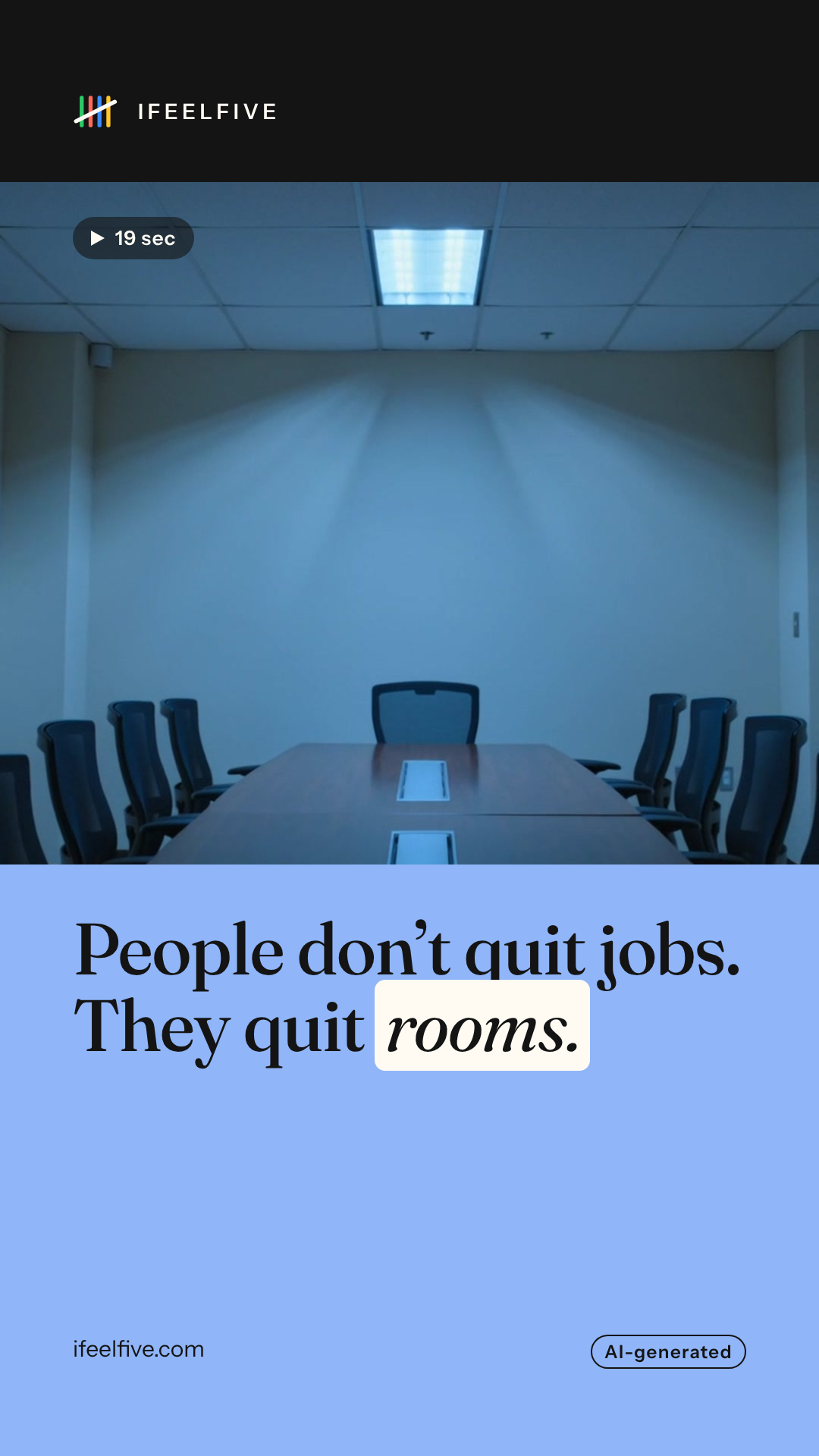 Play video · 23 sec
In short
People rarely leave because of the work itself. They leave the rooms around it: the meeting where nobody says what they think, the call that drains the whole day. Culture is simply how people feel after talking to you. And everyone, not only managers, is someone else's room.
People don't quit jobs.
They quit rooms.
Most people can handle hard work. What wears them down is how it feels to be in the room where the work is discussed. Try this: think of the last time you wanted to leave a job, and ask whether it was the task or the atmosphere.
The meeting where nobody says what they think.
Silence in a meeting is rarely agreement.
When honest opinions only appear in the hallway afterwards, the room isn't safe enough yet. Try this: in your next meeting, ask "What are we not saying?" and wait a moment longer than feels comfortable.
The call that drains your whole day.
Thirty minutes can cost an afternoon.
Some conversations leave a heaviness that lasts for hours. Try this: notice which calls drain you and which give you energy, and look at what is different between them.
Culture is how people feel after talking to you.
Not the values on the wall. The feeling on the way out.
Culture lives in small moments: how you greet someone, how you react to bad news, whether people leave a conversation lighter or heavier. Try this: after your next conversation, ask yourself how the other person probably felt walking away.
You are someone's room, too.
Every one of us shapes a room, title or not.
You don't need to lead a team to make a room better. Colleagues, friends and family all walk into the space you create. Try this: pick one conversation this week and decide in advance how you'd like the other person to feel afterwards.
Why not be the one people want to come back to?
Start the work day on your own side: Work affirmations →
Watch on InstagramWatch on FacebookWatch on YouTubeWatch on TikTok
Transcript
AI-generated video: the voice and the images were created with AI. How we use AI
People don't quit jobs. They quit rooms.
The meeting where nobody says what they think. The call that drains your whole day.
Culture is how people feel after talking to you. And you are someone's room, too.
Why not be the one people want to come back to?
I feel five. Everything else is noise.
Questions people ask
Why do people really quit their jobs?
Often not because of the work itself, but because of how it feels to work there: meetings where people can't speak openly, draining conversations, or a manager who leaves them feeling small. The atmosphere matters as much as the task.
Is it true that people leave managers, not companies?
It's a common saying, and it points to something real: the people you work with every day shape how you experience a job. Managers have a big influence, but so does every colleague in the room.
What is company culture, in simple words?
How people feel after talking to each other. Values and mission statements matter less than the small, everyday moments in meetings, calls and hallway conversations.
How can I make meetings feel safer for honest opinions?
Ask open questions, invite quieter people in by name, thank people for disagreeing and allow short silences. Over time people learn that saying what they think is welcome.