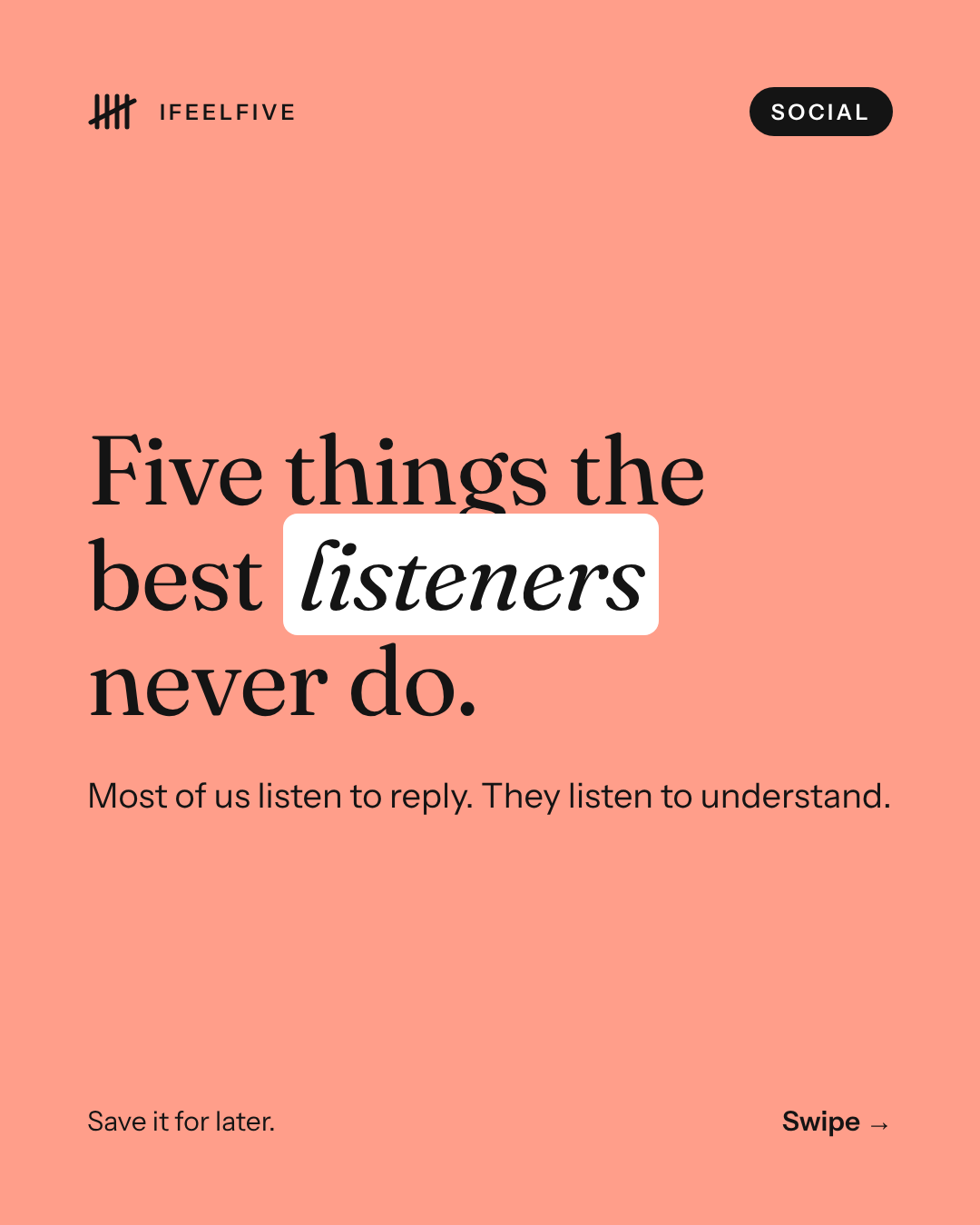
Five things the best listeners never do.
Most of us listen to reply. They listen to understand.
In short
Good listeners are defined less by what they do than by what they hold back. They don't rehearse their answer while you talk, don't jump to advice, don't finish your sentences, don't make the story about themselves and don't rush to fill a silence. That restraint is what makes people feel heard.
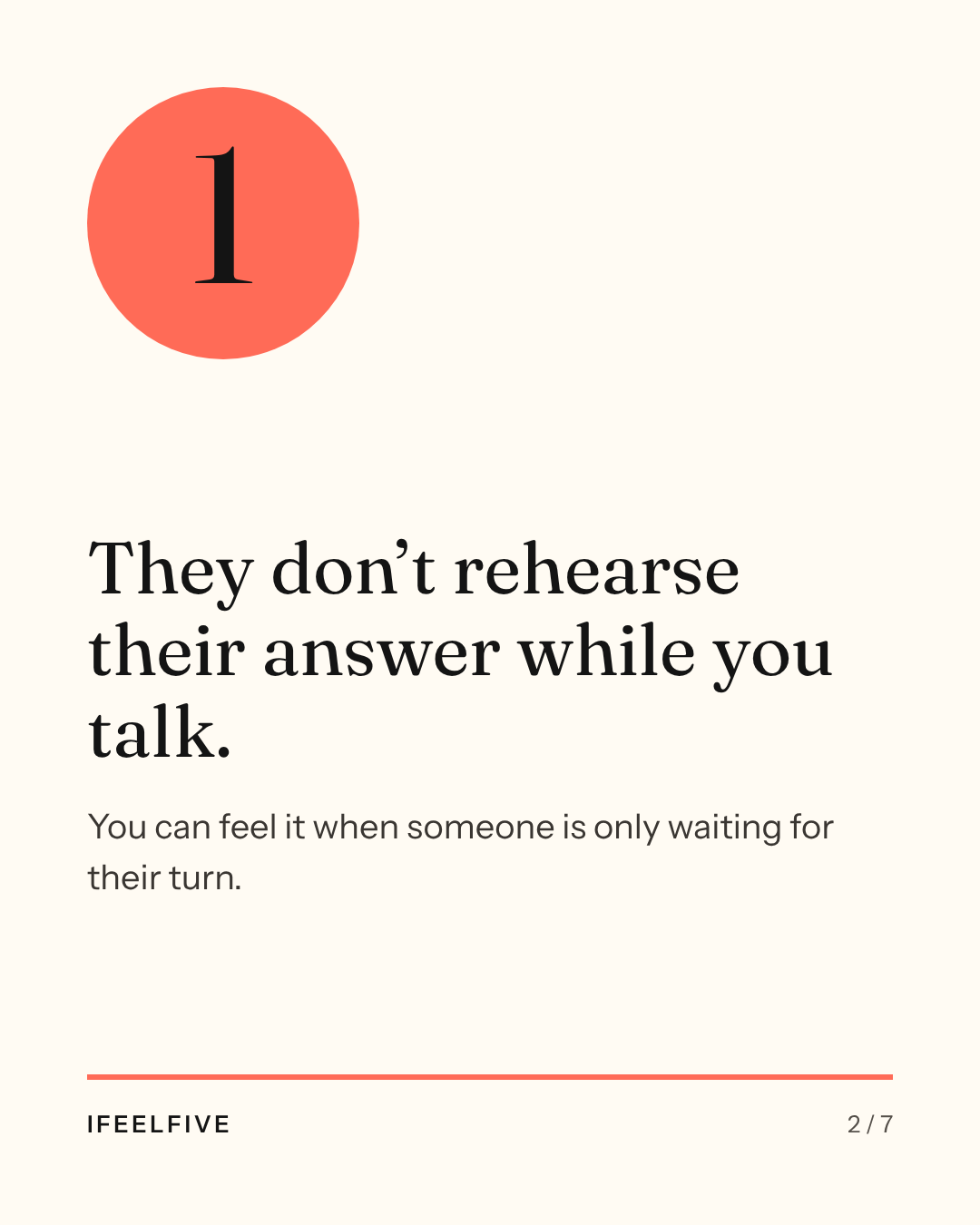
They don't rehearse their answer while you talk.
You can feel it when someone is only waiting for their turn.
Planning your reply means you stop taking in what is being said. Try this: before you answer, briefly repeat what you understood in your own words.
They don't jump to advice.
Most people don't need a fix. They need a witness.
Quick advice can feel like a way to end the conversation. Try this: ask "Do you want ideas, or do you want me to just listen?"
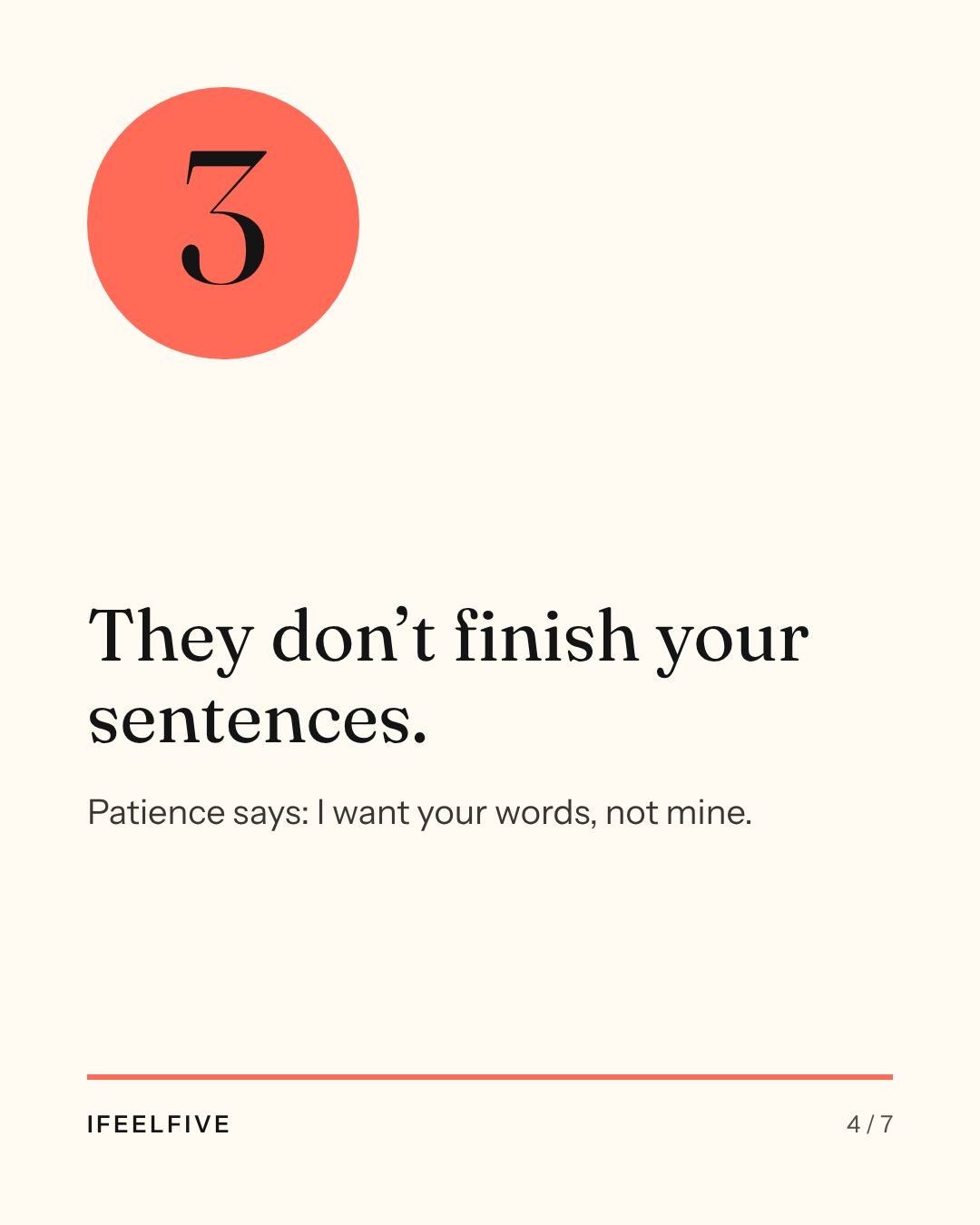
They don't finish your sentences.
Patience says: I want your words, not mine.
Finishing someone's sentence replaces their thought with your guess. Try this: let them get there, even if it takes a moment longer.
They don't make it about themselves.
"That happened to me too" can wait.
Sharing a similar story feels like empathy but moves the spotlight to you. Try this: ask one more question about their experience before you mention yours.
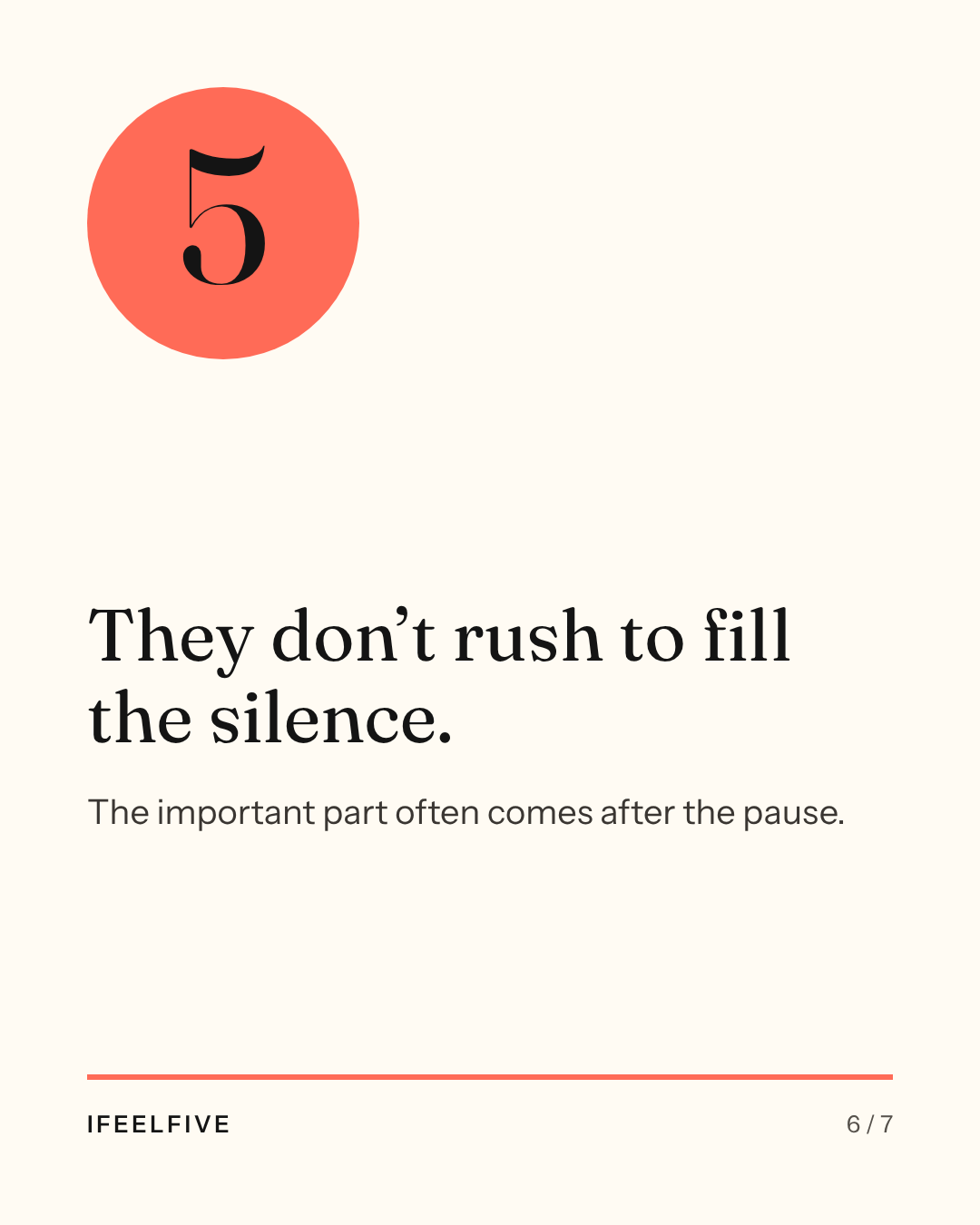
They don't rush to fill the silence.
The important part often comes after the pause.
People often say the real thing only after a short silence. Try this: count to three in your head before you speak.
Who listens to you like this? Send this to them.
Save the cards
Free to share. Every card you download carries ifeelfive.com as the source, and we ask you to keep it there.


Questions people ask
What makes someone a good listener?
A good listener gives full attention, holds back advice and their own stories, and lets pauses happen. The other person leaves feeling understood rather than corrected.
How can I listen without giving advice?
Ask whether the person wants ideas or just wants to be heard. If they want to be heard, reflect back what you understood and ask a follow-up question instead of offering a solution.
What is active listening?
Active listening means focusing completely on the speaker, checking that you understood them, and responding to what they actually said instead of what you planned to say.